
Environment Conservation Journal
“An International Journal Devoted to Conservation of Environment”
(A PEER REVIEWED/REFEREED JOURNAL)
ISSN: 2278-5124 (Online) :: ISSN: 0972-3099 (Print)
Environment Conservation Journal
Environment Conservation Journal is an Open Access | Peer-Reviewed/Refereed journal. It provides a platform for researchers and scientists to publish scientific research views in the field of agriculture, biological, and environmental sciences to promote the speedy propagation of quality research information.
ECJ aims to publish original research/ review papers/ Book reviews/ Reports on conferences/ seminars/ important events, news of interest on the environment-related aspects. It encourages the submission of two categories of papers. The first category comprises scientific papers, and the second category comprises engineering papers. The study of the environment is inherently multidisciplinary. Therefore, the Journal publishes a wide range of topics.
Author Self-Archiving Policy – This journal permits and encourages authors to post items submitted to the journal on personal websites or institutional repositories after publication while providing bibliographic details that credit its publication in this journal.
Published By – Action for Sustainable Efficacious Development and Awareness (ASEA)
Topics Covered Include
Abstracted and Indexed
Current Issue – Volume 27 (1) 2026
In-Silico prediction and characterization of Elephant endotheliotropic herpesvirus proteins for development of immunodiagnostics
Kirtika Sharma, K. G. Sai Balaji, Karikalan Mathesh, Pracheta Janmeda, Gaurav Kumar Sharma
Dicranum scoparium Hedw. (Dicranaceae: Bryophyta) – A new addition to the moss flora of Peninsular India from Eravikulam National Park, Kerala
Amaljith James, PS Prakash, Anpin Raja RD, Arun Raj RD
Temperature-induced biochemical and histological changes in captive Nile Tilapia, Oreochromis niloticus
Sathiamoorthi Murugaiah, Nagarajan Kalimuthu
Risk assessment of solute leaching from paper industry effluents in heterogeneous soils of seemanchal
Aamile Islam, Abdur Rahman Quaff
Impact of habitat change on diversity of birds in tropical forest in Mizoram, India
G.S. Solanki, D. K. Borah, Vanlalchhuanga
Online First
Arsenic biosorption utilizing microbes isolated from hot spring water for potential application in bioremediation
Mamta Arya, Manali Kaintura, Vishal Khandelwal, Naveen Gaurav, Preeti Nirala, Anjali Patil
Contamination of air, water, and leafy vegetables by human enteric pathogens in and around Bogotá (Colombia)
Jose S Jordan, Pierre Renault, Carlos Guerrero
Preliminary Checklist of Moth Fauna (Lepidoptera: Heterocera) of District Solan, Himachal Pradesh, India
Manmeet Pal Kaur, Amritpal Singh Kaleka, Gurinder Kaur Walia, Lipsa Dehal
Ayurveda enigma for thyroid balance
Shikha Thakur, Atreyi Pramanik, Ajay Narwal, Ajay Singh, Anamika Chauhan, Nisha Praveen, Pardeep Yadav
Milk consumption formulation strategies in microgravity dealing with gastrointestinal flotation and satiety in astronauts: A review
Ayushi Bhaduri, Radha Khirwar, Avinash Sharma, Junaid Aman
Open Access Policy


All content are freely available under Open Access policy and is licensed under Creative Commons Attribution-Non Commercial- 4.0 International License (CC BY- NC 4.0)
Artificial Intelligence (AI) Policy

This policy explains how authors may use Artificial Intelligence (AI) software when preparing and submitting manuscripts to the Environment Conservation Journal (ECJ). Read more on AI Policy
Peer Review Policy

The identity of Reviewers is not known to the Authors we follow single blind peer review method under Peer review policy of the Journal.
Green Policy

As part of our Go Green initiative, we print very limited hard copies. This helps us fulfill our commitment to care of the earth for ourselves and generations to come.
Make Submission
Quick Links
Research Insights (Blog)
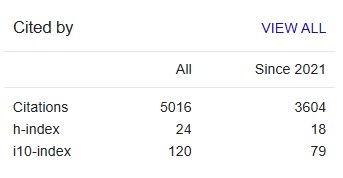
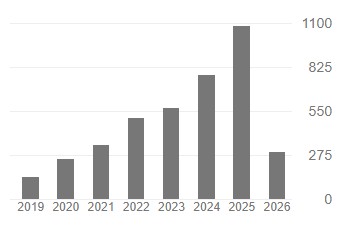
Google Scholar Citations

Published Volume By Year
Latest News
-
We are happy to announce that Volume 27 (1) 2026 of the Environment Conservation Journal is released.
-
We are happy to announce that Volume 26 (4) 2025 of the Environment Conservation Journal is released.
-
We are happy to announce that Volume 26 (3) 2025 of the Environment Conservation Journal is released.
-
We are happy to announce that Volume 26 (2) 2025 of the Environment Conservation Journal is released.
-
We are happy to announce that Volume 26 (1) 2025 of the Environment Conservation Journal is released.
-
We are happy to announce that Volume 25 (4) 2024 of the Environment Conservation Journal is released.
-
We are happy to announce that Volume 25 (3) 2024 of the Environment Conservation Journal is released.
-
We are happy to announce that Volume 25 (2) 2024 of the Environment Conservation Journal is released.
-
We are happy to announce that Volume 25 (1) 2024 of the Environment Conservation Journal is released.
-
We are happy to announce that Volume 24 (4) 2023 of the Environment Conservation Journal is released.
-
We are happy to announce that Volume 24 (3) 2023 of the Environment Conservation Journal is released.
-
Special issue for International Conference on Mountain Ecosystems: Biodiversity and Adaptations under Climate Change Scenario
-
We are happy to announce that Volume 24 (2) 2023 of the Environment Conservation Journal is released.
-
We are happy to announce that Volume 24 (1) 2023 of the Environment Conservation Journal is released.
-
We are happy to announce that Volume 23 (3) 2022 of the Environment Conservation Journal is released.
-
Revision in the number of Issues and Fee structure of Environment Conservation Journal w.e.f. 1st January 2023Dear Author
We have an important update for you
There is a revision in the number of Issues and Fee structure of Environment Conservation Journal w.e.f. 1st January 2023
Environment Conservation Journal will now be published quarterly i.e. March, June, September and December month of each Year.
Article Processing Charges will be Rs. 7500/- (With in India) and US Dollar 225 (Outside India) up to 15 printed pages of the journal and there-after INR 500(within India)/ USD 15 (outside India) for additional each print page, will be charged for publication of the MS.
We assure you the best of our services always
Warm Regards
Editor-in-Chief
Environment Conservation Journal -
We are happy to share that Environment conservation Journal is now indexed in Web of Science Master journal list.
-
We are happy to announce that Volume 23 (1&2) 2022 of the Environment Conservation Journal is released.
-
We are happy to announce that Volume 22 (3) 2021 of the Environment Conservation Journal is released.
-
We are happy to announce that Volume 22 (1&2) 2021 of the Environment Conservation Journal is released.
-
We are glad to announce that ENVIRONMENT CONSERVATION JOURNAL has passed the NAAS evaluation and got NAAS score of 5.66 wef 1st January 2021. We are extremely grateful for the invaluable work of our ECJ team in contributing to the strategic development of the Journal. It is time for us to look at the journal as truly international and continue to work hard to help the journal in climbing up the ranking ladder.We would also like to acknowledge the support received from authors and readers during these years.
-
We are happy to announce that Volume 21 (3) 2020 of Environment Conservation Journal is released.
-
Original Research papers are invited for publication in Special Edition on “ALL ASPECTS OF AGRICULTURAL, FOOD AND DAIRY SCIENCES“. The Journal is peer reviewed international Journal for publication of Original Research papers/reviews/short communications etc.
-
We are happy to announce that Volume 21 (1&2) 2020 of Environment Conservation Journal is released.
-
Dear Colleague,
I am pleased to inform you that ENVIRONMENT CONSERVATION JOURNAL has joined Reviewer Credits, the most comprehensive platform to certify, measure and reward the activity of scientists as Peer Reviewers. Each review you will perform for ENVIRONMENT CONSERVATION JOURNAL will be validated by the Editor, it will be added to your personal certificate and will entitle you to virtual credits, which can be used to obtain benefits offered by Reviewer Credits partners and included in the virtual store. We encourage OUR REVIEWERS to register on the Review Credits platform and claim reviews performed for ENVIRONMENT CONSERVATION JOURNAL. This service is provided free of charge.
This innovative collaboration represents for us a crucial effort and a great step forward for a higher recognition of editorial activities, contributing to a comprehensive re-thinking and a global innovation of the academic editorial world. -
Indexing in Euro Pub (U.K.) and IP indexing (India)We are happy to announce that ENVIRONMENT CONSERVATION JOURNAL is now indexed in Euro Pub (U.K.) and IP indexing (India) with IPI Value of 3.46 for the year 2019 . We would like to acknowledge the support received from you all in this regard.
-
Volume 20 issue 3, 2019 ReleasedWe are happy to announce that Volume 20 (issue 3) 2019 of the Environment Conservation Journal is released.
-
Special Edition on Ayurveda, Yoga and Meditation: Changing LifestyleWe are happy to inform you that Our Special Edition on Ayurveda, Yoga and Meditation: Changing Life style has released. The whole team thanks our Guest Editors i.e. Prof. Ishwar Bhardwaj, Dr. Udham Singh, Prof. Uttam Sharma and Dr. Gyanendra D. Shukla for their contribution towards the Journal.
-
Online Journal System (OJS)Environment Conservation Journal is happy to announce that we have configured Online Journal System to our website. Open Journal Systems (OJS) is designed to facilitate the development of open access, peer-reviewed publishing, providing the technical infrastructure not only for the online presentation of journal articles, but also an entire editorial management workflow, including: article submission, multiple rounds of peer-review, and indexing.
-
Welcome to New Editorial Board MembersWe are happy to inform you that Environment Conservation has elected new editorial board from 15th November 2019.One of the great strengths of Environment Conservation Journal has been the involvement of many of the world’s leading scholars from the fields of Sciences on our Editorial Board. Members of the Editorial Board are crucial in facilitating the Editors’ desire to maintain high standards of scholarly excellence in the work we publish, and we are extremely grateful for the invaluable work of our Editorial Board in contributing both to our rigorous peer-review system and to the strategic development of the Journal.
And we are delighted to welcome the newcomers, whose experience across the breadth of disciplines will allow us to remain at the forefront of publishing original scholarship in these areas. It is time for us to look at the journal as truly international and continue to work hard to help the journal in climbing up the ranking ladder.
Once Again we Welcome all Editorial Board Members -
Volume 20 (1&2) 2019 releasedWe are happy to announce that Volume 20 (1&2) 2019 of the Environment Conservation Journal is released.
-
Volume 18 (1 & 2) ReleasedWe are happy to announce that Volume 18 (1 & 2) of the Environment Conservation Journal is released.
-
If any person introduce himself or herself as agent of ENVIRONCJ…If any person introduce himself or herself as agent of ENVIRONMENT CONSERVATION JOURNAL kindly disregard. We do not have any agent throughout the World. We accept papers only through our website submission or through our main E-mail ID i.e. [email protected]
Latest Tweet
We are happy to announce that Volume 27 (1) 2026 of the Environment Conservation Journal is released. To see the table of content kindly click on the below-given linkhttps://t.co/N8MVXBaUyT
— Environment Conservation Journal (@environcj) March 22, 2026
Meet Our Editorial Team